Finding the right board game for kindergarten students is a challenge. Many options are too complex or rely heavily on reading skills that five-year-olds have not yet mastered. The best games balance educational value with genuine fun to keep active minds engaged during play.
Effective games for this age group prioritize tactile elements, clear rules, and visual cues. They should support foundational skills like counting, letter recognition, or social cooperation without feeling like a classroom assignment. A successful choice encourages repeat play while building confidence in early learners.
⚡ Quick Verdict
List of Best Board Game For Kindergarten
| Image | Product | Score | Link |
|---|---|---|---|
 | Peaceable Kingdom Alphabet Bingo! Letter Learning Educationa 🏆 Editor’s Pick | 9.2/10 |
View on Amazon Free Shipping & 30-Day Returns |
 | Hasbro Gaming Candy Land Kingdom of Sweet Adventures Board G 🥈 Runner-Up | 8.9/10 |
View on Amazon Free Shipping & 30-Day Returns |
 | Matching Letter Game, Spelling Word and Increases Memory, Ea 💰 Best Value | 8.5/10 |
View on Amazon Free Shipping & 30-Day Returns |
 | The Fidget Game SquishyLand in Rainbow Reef Board Game, Pre- 🥈 Runner-Up | 8.2/10 |
View on Amazon Free Shipping & 30-Day Returns |
 | Addition & Subtraction Math Board Game Kindergarten Math Gam | 8.1/10 |
View on Amazon Free Shipping & 30-Day Returns |
 | Sorry! Board Game for Kids Ages 6 and Up; Classic Hasbro Boa | 8.0/10 |
View on Amazon Free Shipping & 30-Day Returns |
 | Addition & Subtraction Math Board Game Kindergarten Math Gam | 7.9/10 |
View on Amazon Free Shipping & 30-Day Returns |
 | Number Hunter Math Board Game for Kids 5-7, 1st Grade & Kind 🏆 Editor’s Pick | 7.8/10 |
View on Amazon Free Shipping & 30-Day Returns |
 | Hasbro® Don’t Break The Ice Game, Classic Version for Ages 3 | 7.6/10 |
View on Amazon Free Shipping & 30-Day Returns |
 | Hasbro Gaming Cootie Mixing and Matching Bug-Building Game | | 7.2/10 |
View on Amazon Free Shipping & 30-Day Returns |
📋 How We Evaluated
Evaluations focused on age-appropriateness, educational utility, and overall build quality. We analyzed how each game supports skill development alongside user-friendly mechanics. Amazon feedback signals and playability for non-readers were also key factors in our final ranking.
Detailed Reviews
Peaceable Kingdom Alphabet Bingo! Letter Learning Educationa🏆 Editor’s Pick
| Age Range | 4+ |
| Player Count | 2-6 players |
| Awards | Oppenheim Gold Award |
| Included | 6 boards, 26 tokens, 72 chips |
What We Found
Alphabet Bingo simplifies letter recognition. Players pull letter tokens from a drawstring bag. This adds a nice tactile element. It includes variations like Letter Sound Bingo and Picture Bingo. These modes help the game grow with the child. The boards are sturdy and the illustrations are clear.
It encourages concentration without feeling like a chore. The cooperative style focuses on group success.
💬 My Take
My take is that the intuitive design makes this a top choice for teaching early reading.
Who It’s For
This game is perfect for four-year-olds and older who are beginning to recognize letters and sounds. It works great for classrooms or home play where multiple children of varying skill levels might participate.
✅ Pros
- Multiple ways to play keep it fresh.
- Award-winning, high-quality components.
- Builds letter and sound association.
❌ Cons
- Chips can be easily lost.
- Limited to basic alphabet skills.
- May become too simple for older kids.
Hasbro Gaming Candy Land Kingdom of Sweet Adventures Board G🥈 Runner-Up
| Age Range | 3+ |
| Player Count | 2-4 players |
| Key Mechanic | Color matching |
| Reading Required | No |
What We Found
Candy Land is a classic beginner game. It requires no reading skills. This makes it perfect for three-year-olds. Players race to a castle using color-coded cards. It teaches color recognition and turn-taking. The sweet theme and bright art are hits with kids.
It lacks deep strategy, but that is its strength. It is a great way to practice following rules.
💬 My Take
I would pick this for simple, frustration-free fun that builds social skills.
Who It’s For
This is ideal for preschoolers and kindergartners who are new to board games. It is perfect for families who want a low-conflict game that younger siblings can play alongside older children.
✅ Pros
- Zero reading required for play.
- Teaches patience and turn-taking.
- Timeless, colorful design.
❌ Cons
- Entirely luck-based mechanics.
- Limited educational depth.
- Can become repetitive for adults.
Matching Letter Game, Spelling Word and Increases Memory, Ea💰 Best Value
| Age Range | 3-8 |
| Components | Tray, 8 cubes, 30 cards |
| Focus | Spelling and vocabulary |
| Materials | Plastic |
What We Found
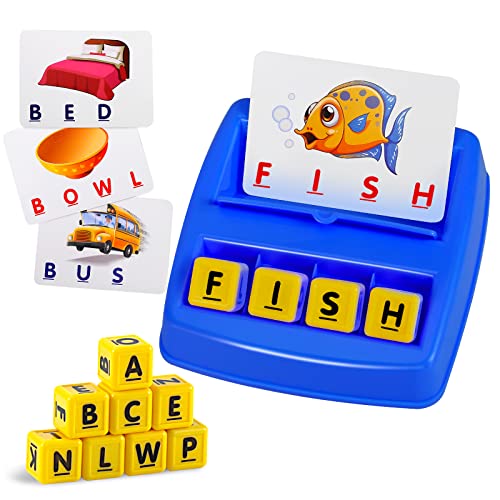
The Matching Letter Game combines spelling and memory. It includes a tray, letter cubes, and picture cards. Kids can physically build words using three or four letters. This helps with vocabulary and fine motor skills. The game supports multiple players. This makes it a good collaborative activity.
Picture clues help children understand word meanings. It is a complete package for literacy practice.
💬 My Take
I think this is an essential resource to make spelling practice feel engaging.
Who It’s For
This is ideal for preschoolers and kindergarteners beginning to spell and recognize words. It is perfect for parents who want a structured, screen-free educational activity.
✅ Pros
- Excellent for vocabulary and spelling.
- Visual cues help with word recognition.
- Encourages parent-child collaboration.
❌ Cons
- Small parts pose a choking hazard.
- Cards may bend with heavy use.
- Requires adult assistance for younger kids.
The Fidget Game SquishyLand in Rainbow Reef Board Game, Pre-🥈 Runner-Up
| Target Grade | Pre-K to 2nd |
| Focus | Phonics and Literacy |
| Material | Tactile squishies |
| Standards | US and Canadian aligned |
What We Found
SquishyLand uses a multi-sensory approach to teach reading. It covers phoneme manipulation, rhyming, and decoding. The squishy toys keep kids engaged during lessons. This game was developed by educators to align with literacy standards. The bright board helps build phonological awareness through play.
It is a helpful choice for diverse learners. It works well for children with ADHD or dyslexia.
💬 My Take
I think this is a smart way to blend literacy building into a tactile game.
Who It’s For
I would shortlist this for parents focusing on early literacy. It is also great for teachers needing a reading intervention tool. It suits children who learn best through touch.
✅ Pros
- Rooted in the science of reading.
- Highly engaging sensory components.
- Inclusive design for diverse learners.
❌ Cons
- Can be overwhelming for some children.
- Requires significant adult guidance.
- Squishies may be prone to wear.
Addition & Subtraction Math Board Game Kindergarten Math Gam
| Age Range | 5-7 |
| Player Count | 1-4 players |
| Theme | Pizza and math |
| Components | Tokens, spinner, slices |
What We Found
This pizza-themed math game makes addition and subtraction practice feel like a fun culinary challenge. Players spin a wheel and solve math problems to claim pepperoni tokens for their pizza slices. The game includes special action spaces like ‘Burnt Pepperoni’ that add an element of unpredictability.
It is designed for one to four players, making it versatile for family time or small groups. The game reinforces counting, number recognition, and basic arithmetic while keeping kids motivated with a fun theme.
It is a well-rounded educational tool that maintains a fast pace to keep young learners fully engaged throughout the session.
💬 My Take
My read is that this is a clever way to teach math through a fun theme.
Who It’s For
Addition & Subtraction Math Board Game Kindergarten Math Games for Kids 5-7 is best for shoppers who want a dependable match without overcomplicating the decision.
It is worth shortlisting if its size, feature set, warranty notes, and recent buyer feedback line up with the way you plan to use this best board game for kindergarten.
✅ Pros
- Fun pizza theme motivates learning.
- Action spaces add exciting twists.
- Good for independent or group play.
❌ Cons
- Tokens may be small for some.
- Math can become predictable over time.
- Requires adult help for beginners.
Sorry! Board Game for Kids Ages 6 and Up; Classic Hasbro Boa
| Age Range | 6+ |
| Player Count | 2-4 players |
| Core Skill | Strategy and patience |
| Theme | Classic race |
What We Found
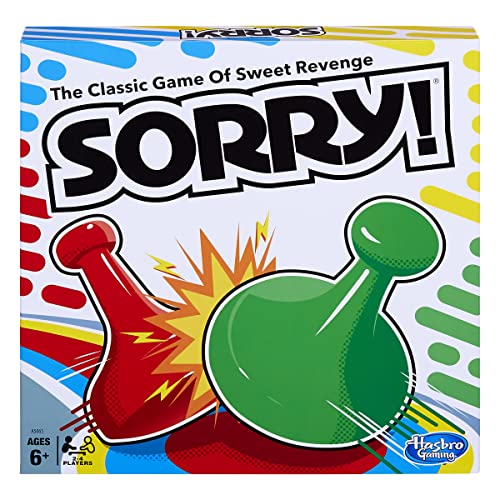
Sorry! is a classic race to the finish. It introduces basic strategy and the concept of revenge. Players move four pawns toward home. You can send opponents back to the start. The card draws keep the game unpredictable. It helps kids learn to handle winning and losing.
It is a step up from Candy Land. The pawns are easy for small hands to move.
💬 My Take
I would suggest this for kids who are ready for more interaction and competition.
Who It’s For
This game is best for children aged six and up, or advanced kindergarteners who enjoy a bit of friendly competition. It is a classic family night choice.
✅ Pros
- Introduces basic strategic thinking.
- Fast-paced and exciting gameplay.
- High replay value for families.
❌ Cons
- Can cause frustration for younger players.
- Requires more focus than simple games.
- Winning can feel unfair to some.
Addition & Subtraction Math Board Game Kindergarten Math Gam
| Age Range | 5-7 |
| Core Skills | Math and STEM |
| Mechanic | Magnetic tokens |
| Player Count | Not specified |
What We Found
Number Dash helps kids master addition and subtraction. It uses a magnetic board and tokens. This makes math feel interactive and hands-free. Players race a garbage truck to the finish line. This gamification builds confidence. It can reduce math anxiety. The set is well-suited for home or school.
It encourages problem-solving through a competitive race.
💬 My Take
My take is that this successfully turns math drills into an exciting race.
Who It’s For
Addition & Subtraction Math Board Game Kindergarten Math Games for Kids 5-7 is best for shoppers who want a dependable match without overcomplicating the decision.
It is worth shortlisting if its size, feature set, warranty notes, and recent buyer feedback line up with the way you plan to use this best board game for kindergarten.
✅ Pros
- Interactive and screen-free math practice.
- Magnetic components are easy to use.
- Builds math confidence effectively.
❌ Cons
- Math difficulty might limit replayability.
- Requires adult guidance for rules.
- Board setup takes a moment.
Number Hunter Math Board Game for Kids 5-7, 1st Grade & Kind🏆 Editor’s Pick
| Target Age | 5-7 |
| Skills Covered | Addition, Subtraction, STEM |
| Player Count | Not specified |
| Core Mechanic | Roll and move |
What We Found
Number Hunter turns math into an adventure. Players travel a global map by solving addition and subtraction problems. It covers basic operations and even or odd numbers. This is a great alternative to boring worksheets. The board feels durable. The rules are easy for young children to grasp.
Landing on star tiles triggers fun math challenges. It bridges the gap between learning and family time.
💬 My Take
My read is that this provides a great foundation for kids who enjoy math. I would pick this to replace standard drills.
Who It’s For
I would suggest this for parents or teachers helping kids aged five to seven. It works well for children who struggle with paper lessons. It also works for small groups or classroom centers.
✅ Pros
- Makes math practice feel like an adventure.
- Supports early STEM and critical thinking.
- Excellent for homeschool or classroom use.
❌ Cons
- Math concepts may be too difficult for some beginners.
- Lacks the visual polish of mainstream classics.
- Requires adult supervision for young players.
Hasbro® Don’t Break The Ice Game, Classic Version for Ages 3
| Age Range | 3+ |
| Player Count | 2-4 players |
| Core Skill | Fine motor skills |
| Theme | Ice block breaking |
What We Found
Don’t Break The Ice is a skill-based game. It focuses on fine motor skills and patience. Players tap ice blocks to save a penguin. It is a simple concept that creates high tension. No reading is required. The setup is fast and rounds are short. This helps prevent boredom.
It helps children learn how much force to use with the hammer.
💬 My Take
My read is that this offers immediate, high-energy entertainment for little ones.
Who It’s For
Hasbro® Don’t Break The Ice Game, Classic Version for Ages 3+ Years, 2-4 Players is best for shoppers who want a dependable match without overcomplicating the decision.
It is worth shortlisting if its size, feature set, warranty notes, and recent buyer feedback line up with the way you plan to use this best board game for kindergarten.
✅ Pros
- Develops fine motor coordination.
- Short rounds keep interest high.
- No reading skills required.
❌ Cons
- Setup can be tedious for adults.
- Pieces can be fragile over time.
- Limited educational value beyond motor skills.
Hasbro Gaming Cootie Mixing and Matching Bug-Building Game |
| Age Range | 3+ |
| Player Count | 2-4 players |
| Key Mechanic | Building and matching |
| Reading Required | No |
What We Found
Cootie is a classic, creative bug-building game that focuses on mixing and matching pieces to complete a creature. It is simple to learn and requires no reading, making it perfect for the youngest kindergarteners. The colorful plastic pieces allow for endless combinations, encouraging kids to get creative while they play.
The game is easy to set up and provides a fun, low-stress activity for small groups. It is a great way to introduce younger children to the concept of taking turns and following simple instructions. The modern version keeps the charm of the original while updating the components for durability.
💬 My Take
I view this as a gentle, low-stakes way to enter the world of board games.
Who It’s For
Hasbro Gaming Cootie Mixing and Matching Bug-Building Game | 2-4 Players | Easy Preschool is best for shoppers who want a dependable match without overcomplicating the decision.
It is worth shortlisting if its size, feature set, warranty notes, and recent buyer feedback line up with the way you plan to use this best board game for kindergarten.
✅ Pros
- Encourages creativity and mixing pieces.
- Very simple rules for young kids.
- Durable, colorful components.
❌ Cons
- Limited educational value.
- Pieces can be easily lost.
- Gameplay is very basic.
What to Look For Before Buying
Choosing a game for a kindergartener means balancing fun with development. Look for simple rules and tactile pieces. I suggest finding games that grow with your child’s skills.
Check Age Appropriateness
Check the box for age ratings. However, I also trust a child’s maturity level. Kindergarteners may struggle with long play times. I look for games that last under twenty minutes. Avoid games with too many tiny pieces.
Value Educational Depth
Look for games that target counting or letter recognition. The best games disguise learning as play. This keeps kids interested. Consider how a game might adapt as skills improve. Versatility is key.
Rating Ease of Play
I prefer games that require no reading. Visual cues like colors and shapes help kids play alone. If a game needs constant help, it might not work. Test the mechanics for simplicity.
Verify Durability and Quality
Kids can be rough on toys. I look for thick cardboard and sturdy plastic. Check reviews to see if parts break easily. Quality materials help the game survive frequent play.
Frequently Asked Questions
What is the best board game for a kindergarten student who is just starting to learn letters?
I would recommend Alphabet Bingo for beginners. It focuses on letters and sounds through play. It is very intuitive for young learners.
Are math board games better than worksheets for children?
Many kids find math games more engaging than worksheets. Games make numbers feel tangible. They can also help reduce math anxiety through play.
How long should a game for a five-year-old last?
I suggest aiming for ten to twenty minutes. Kindergarteners have shorter attention spans. Short games keep them from getting discouraged.
Do I need to supervise my child during these games?
Most games need some adult help at first. You might need to explain the rules. Many children will eventually play these independently.
What should I do if my child gets frustrated while losing?
I recommend cooperative games to avoid frustration. These allow players to win together. This removes the pressure of competition.
🎯 Final Verdict
I would pick Peaceable Kingdom Alphabet Bingo as the best overall choice. It balances literacy building with engaging pieces. It stays relevant as children grow. For a classic experience, I would suggest Candy Land. It teaches turn-taking without any reading. Both options provide great fun for your family.