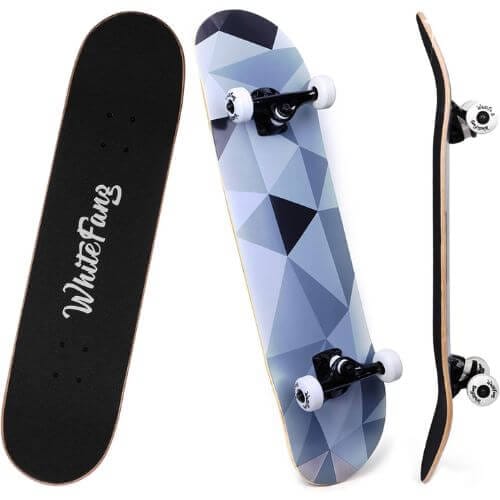
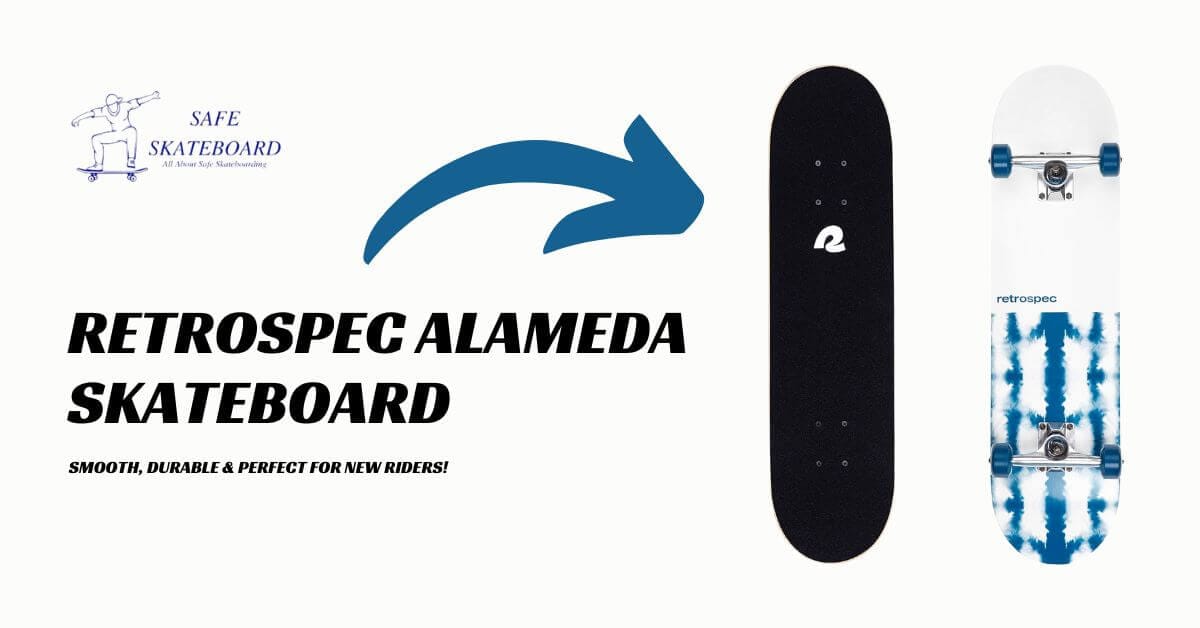
If you ask a professional skater which board to buy, they will tell you to go to a local skate shop and spend $120. They aren’t wrong, but they also aren’t paying your bills. Realistically, most parents and beginners have a budget of $40 to $50. That leaves you with two main choices: the Retrospec Alameda and the Whitefang 31 Skateboard.
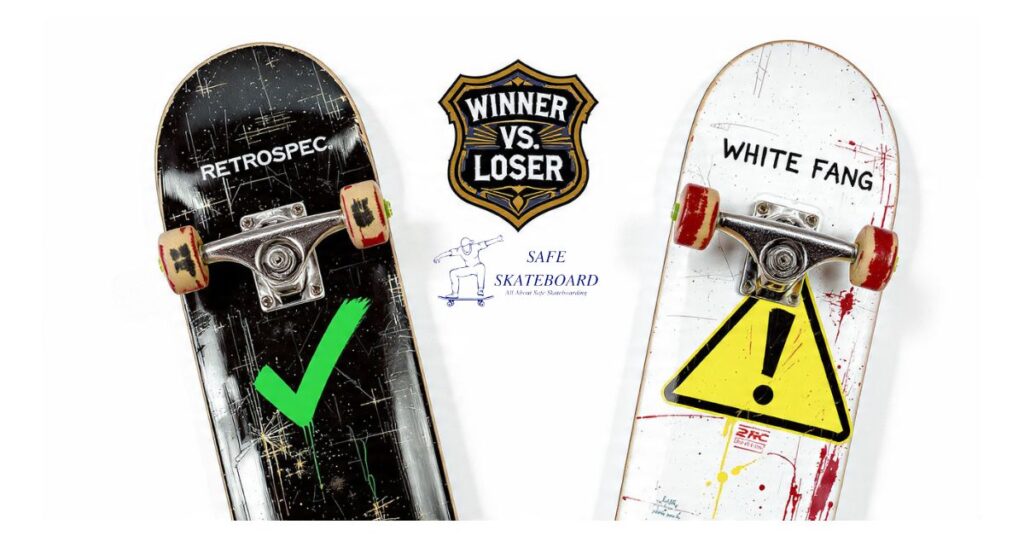
On paper, they look identical. Both claim to have “7-Ply Maple decks,” “ABEC-7 bearings,” and “High-Rebound wheels.” But after buying both and testing them on rough asphalt, I found that one is a legitimate entry-level cruiser, while the other is essentially a toy that carries hidden risks for new riders.
The difference isn’t about doing kickflips; it’s about whether the wheels will stop dead when they hit a small pebble, sending your child flying forward.
The 10-Second Verdict: Which is Safe For Beginners?
If you don’t have time to read the full breakdown, this table tells you everything you need to know.
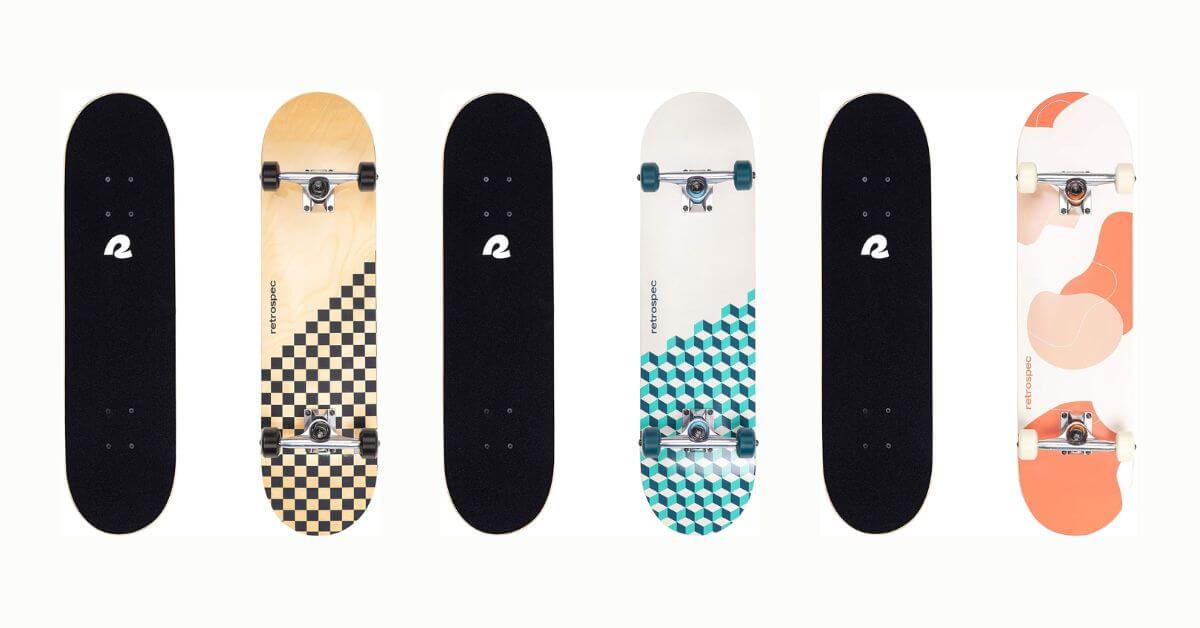
| Feature | Retrospec Alameda ($45-$50) | Whitefang 31″ ($30-$40) |
| Safety Score | 7/10 (Passable) | 4/10 (Risk of Falls) |
| Wheel Material | Urethane (Grips the road) | Plastic Blend (Slippery & Loud) |
| Truck Stiffness | Responsive (Turns predictably) | Stiff/Unsafe (Hard to turn) |
| Real Max Weight | ~180 lbs | ~120 lbs (Kids only) |
| Best For | Commuting, Cruising, & Beginners | Driveway practice (Ages <8) |
| The Verdict | The Winner. It feels like a real skateboard. | The “Toy” Pick. Okay for small kids, unsafe for teens. |
If you are buying for a teenager or adult, do not buy the Whitefang. The trucks are often too stiff to turn safely, and the deck can feel spongy under adult weight.
If you are buying for a 6-year-old to roll around the driveway, the Whitefang is acceptable (and cheaper). If you want a board that can actually be ridden to school or down the street, the Retrospec Alameda Skateboard is the only safe option.
Retrospec VS Whitefang Skateboard: Find The Differences

Trucks & Turning: Safety Stress Test
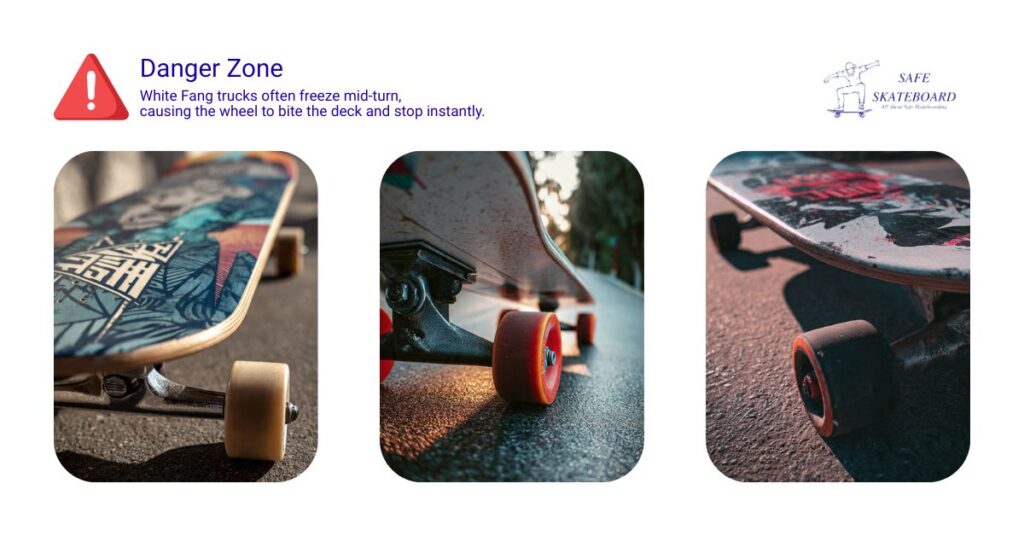
The most dangerous part of a cheap skateboard isn’t the wood snapping. It’s the trucks (the metal axles) refusing to turn. Out of the box, Whitefang trucks often come with extremely hard and plastic bushings (the rubber cushions inside the truck). When a beginner loses balance and leans left, the skateboard should turn left to catch them.
Because Whitefang trucks are so stiff, they continue going straight. The rider leans harder, the wheel eventually touches the board (“wheel bite”), and the board stops instantly. You must use a wrench to loosen the kingpin nut significantly before letting a child ride it.
The Retrospec Alameda uses standard geometry trucks with decent urethane bushings. As a result, it turns smoothly. It’s not “Pro” quality, but it behaves predictably. When you lean, it turns. It builds muscle memory correctly and prevents those sudden, jerky stops that cause wrist injuries.
Wheel Quality: The Fingernail Test
This is the single biggest difference between a toy and a vehicle. You can test this yourself using the “Fingernail Test.” If you press your fingernail into a Whitefang wheel (Plastic Blend), it feels like hard plastic. It barely indents.
On smooth concrete (like a garage), it’s fine. But on asphalt, these hard wheels vibrate violently. They are loud, slippery on corners, and if they hit a small rock, they tend to slide or stop rather than rolling over it.
When you press your nail into a Retrospec wheel, it leaves a temporary mark. This means the wheel is made of High-Rebound Urethane. The soft wheel absorbs road noise. It grips the ground when you turn.
Most importantly, it can roll over small cracks and pebbles without throwing the rider off. For a beginner learning on a driveway or sidewalk, this grip is essential for confidence.
Deck Durability: The 7-Ply Myth
Both brands claim to be made of “7-Ply Canadian Maple.” In the skateboarding world, this is the gold standard. However, not all maple is created equal.
While Whitefang has 7 layers, the wood is often softer and uses heavy amounts of glue. I’ve noticed that under an adult’s weight (160 lbs+), the deck feels “spongy.” It bends significantly in the middle. If a teenager tries to jump down stairs on this, it is likely to delaminate or snap.
The deck of Retrospec is noticeably stiffer and has a better concave (the curve of the wood). It feels closer to a shop-quality deck. It can handle riders up to 200 lbs comfortably without that scary “bending” feeling.
Who Should Buy What? (Final Recommendation)
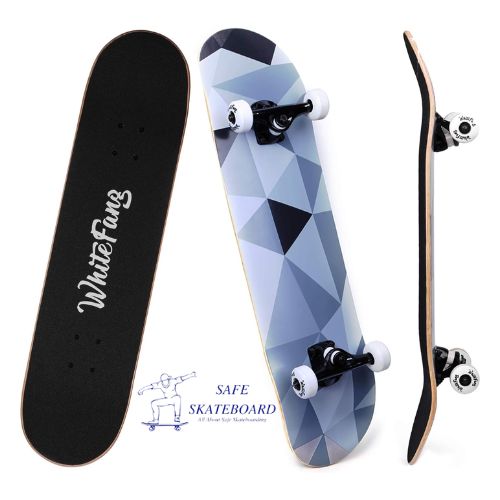
For The 6-Year-Old Kids – Whitefang Skateboard
A 6-year-old weighs 50 lbs. They aren’t heavy enough to compress the trucks or snap the board. For learning to stand and push in the garage, the Whitefang is a perfect, low-cost entry point. If they quit in two weeks, you’re only out $40.
For The Teenager (13+) or Adult – Retrospec Alameda Skateboard
A teenager needs a board that can support their weight and turn at higher speeds. The Retrospec is a legitimate mode of transportation. It’s quiet, smooth, and won’t embarrass them at the skatepark.

How to Make Whitefang Skateboard Safe?
Wanna have a Whitefang Skateboard? Don’t worry. You can make it 50% safer with two cheap adjustments:
- Loosen the Trucks
Use a 9/16″ wrench or a skate tool. Turn the large nut in the center of the truck counter-clockwise by about two full turns. Test the board by pressing down on the side with your hand. It should tilt easily.
- Upgrade the Bearings
The stock bearings are slow. Replace them with Bones Reds ($18). This single upgrade will make the board roll longer and smoother, reducing the need to push constantly.
Final Verdict
Skateboarding is dangerous enough without fighting your equipment. For pure budget safety, the Retrospec Alameda is the clear winner. It bridges the gap between a toy and a pro board, offering soft wheels and responsive trucks that actually help you learn.
On the other hand, the Whitefang has its place as a child’s toy, but for anyone serious about riding on the street, the extra $10 for the Retrospec is the best insurance you can buy.